Showing posts with label surgery. Show all posts

Wednesday, 25 February 2026

Condition of the Week: Sciatica & Nerve Pain

From woodlandsonline.com 

This week's Condition of the Week (COW) is Sciatica & Nerve Pain — one of the most common and misunderstood sources of pain that people quietly live with, often for months or even years before seeking help.

What is Sciatica?

Sciatica isn't a diagnosis on its own. It's a symptom. It refers to pain that travels along the path of the sciatic nerve, which runs from your lower back, through your hips and buttocks, and down each leg. When that nerve becomes compressed or irritated, it can create sensations ranging from a dull ache to a sharp, electric-like shooting pain, sometimes accompanied by tingling, numbness, or weakness in the leg or foot.

Many people are surprised to learn that what feels like a leg problem is actually starting in the spine.

Common causes may include:

  • Herniated or bulging spinal discs (responsible for roughly 90% of cases)
  • Spinal stenosis (narrowing of the spinal canal)
  • Piriformis syndrome (a tight muscle in the buttock pressing on the nerve)
  • Bone spurs or degenerative disc changes
  • Prolonged sitting, sedentary lifestyle, or repetitive strain
  • Obesity or excess body weight adding pressure to the spine

Did You Know?

Up to 40% of Americans will experience sciatica at some point in their lives, making it one of the most widespread nerve-related conditions in the country. Research shows that about 80 to 90% of sciatica cases improve without surgery, especially when the underlying cause is identified and addressed early. Yet without proper care, roughly 25% of sufferers go on to deal with long-term or recurring symptoms. The good news? Most people don't have to stay in that category.


Tips for Managing Sciatica

Keep moving: Prolonged sitting is one of the biggest aggravators. Short, frequent walks throughout the day can reduce nerve pressure
Mind your posture: How you sit, stand, and sleep all affect spinal alignment and nerve tension
Stretch regularly: Gentle piriformis and hamstring stretches can help relieve nerve compression from tight muscles
Apply heat or ice: Ice for acute flare-ups, heat for chronic tightness. Alternating can work well for some people
Avoid the "push through it" approach: Unlike muscle soreness, nerve pain that's ignored tends to worsen over time

How we approach this at HealthSource

At HealthSource, we focus on natural, non-invasive, corrective care designed to address the why behind the symptoms, not just the pain itself. Since sciatica almost always has a mechanical or structural root cause, proper evaluation of the spine is the essential first step.

Chiropractic care works to restore proper spinal alignment and reduce the pressure on irritated nerve roots. For cases involving disc compression, spinal decompression gently creates space between vertebrae, improving disc hydration and relieving the nerve tension that drives sciatic pain. Class IV laser therapy can then support the body's own healing response at the cellular level, reducing inflammation around the nerve and promoting tissue repair deep in areas that are difficult to reach any other way.

Together, these approaches address both the structure and the biology of nerve pain, which is why so many patients find relief through this kind of comprehensive, non-surgical care.

Who do you know dealing with sciatica or nerve pain?

If someone came to mind while reading this, a friend who "throws their back out" regularly, a co-worker always shifting in their chair, or a family member who complains about that nagging leg pain, feel free to pass this along. Sometimes the right information at the right time changes everything. Sometimes prevention starts before symptoms appear.

Sometimes prevention starts before symptoms appear.
Your referral could change a life!

Warmly,
The HealthSource of Harper's Preserve Team

https://www.woodlandsonline.com/blps/article.cfm?page=15343

Friday, 20 February 2026

Persistent sciatic nerve pain: when surgical intervention becomes the crucial next step for relief

From mixvale.com.br

Sciatica, a condition marked by pain radiating along the sciatic nerve, stands as a prevalent cause of physical limitation among adults globally, often triggering significant anxiety and impacting daily routines. While many individuals find relief through conservative treatments—including medication, physiotherapy, and lifestyle adjustments—a subset experiences unyielding discomfort that demands a deeper re-evaluation of their care strategy. Understanding the nuances between persistent pain and a critical need for surgical intervention is pivotal for a favourable long-term prognosis. 

The journey from initial diagnosis to considering surgery is fraught with decisions, balancing the hope of natural recovery with the potential for permanent nerve damage. Medical experts emphasize that early, appropriate intervention can dramatically alter a patient’s trajectory, moving them from chronic suffering to restored functionality.

The evolution of neurosurgical techniques in recent years, especially with minimally invasive procedures, has expanded options for those whose lives are severely impacted by unrelenting sciatic pain, offering quicker recovery times and more targeted relief in specific cases for 2025.

Understanding persistent sciatic pain

Sciatic pain typically arises when the sciatic nerve experiences compression or irritation along its path, most commonly originating in the lumbar spine. This compression can stem from several conditions, including a herniated disc, spinal stenosis, or degenerative changes that narrow the space through which nerve roots pass. The classic symptom involves pain that starts in the lower back and extends through the buttock, thigh, leg, and sometimes even into the foot.

While the majority of sciatica cases are self-limiting and resolve within a few weeks with conservative care, persistence of symptoms indicates a more complex underlying issue. Continuous nerve compression, chronic inflammation, or spinal instability are often culprits behind prolonged discomfort, transforming a temporary ailment into a debilitating condition that disrupts sleep, work, and essential daily activities.

When conservative treatment falls short

Initial management for sciatic pain primarily focuses on conservative methods, which include prescription pain relievers, anti-inflammatory medications, targeted physiotherapy, and muscle strengthening exercises. This comprehensive approach proves highly effective for a substantial number of patients, helping to alleviate symptoms and improve mobility.

However, specific warning signs suggest that the current treatment plan may no longer be adequate and a strategic re-evaluation is warranted. This crucial juncture often marks the point where medical professionals begin to explore more aggressive interventions, including the possibility of surgical solutions, to prevent long-term complications and provide lasting relief.

Crucial signs warranting surgical evaluation

Intense pain that fails to subside after several weeks of consistent treatment, a progressive worsening of symptoms, or the onset of new neurological deficits are significant red flags. These indicators signal that the nerve compression might be severe or worsening, requiring urgent attention beyond non-invasive measures. Key symptoms to watch for include:

  • Persistent numbness or “pins and needles” sensations in the leg or foot.
  • Developing weakness in the leg or foot, making it difficult to lift the foot (foot drop) or walk normally.
  • Difficulty performing everyday tasks, such as standing, sitting, or walking for even short distances due to pain.
  • Any changes in bladder or bowel control, which represent a medical emergency and necessitate immediate professional consultation.

In such instances, advanced diagnostic imaging, such as an MRI, becomes indispensable for pinpointing the exact source of nerve compression. These detailed images allow clinicians to correlate the patient’s symptoms with specific anatomical findings, thereby determining if surgery offers a realistic prospect for significant benefit and symptom resolution.

Modern surgical advancements for sciatica

Surgical intervention for sciatica is typically recommended when there is a clear and direct correlation between the patient’s symptoms and confirmed nerve compression, especially after the failure of conservative treatments or in cases of progressive neurological decline. The primary objective of these procedures is to relieve pressure on the affected nerve, thereby reducing pain and averting irreversible damage to nerve function.

Contemporary neurosurgical techniques have revolutionized the treatment of sciatica, favouring minimally invasive approaches that involve smaller incisions. These less aggressive methods result in reduced tissue trauma, significantly diminished post-operative pain, and markedly faster recovery periods for patients. For carefully selected candidates, the outcomes of these modern surgical interventions are often highly favourable, leading to substantial pain relief and a quick return to their previous functional capacities.

The intricate decision: timing and patient outcomes

The decision to undergo surgery for sciatica is profoundly individualized and must emerge from a thorough and candid discussion between the patient and their healthcare provider, weighing all potential risks, anticipated benefits, and personal expectations. Operating too prematurely might expose a patient to unnecessary risks when conservative treatment could still succeed, while delaying too long could lead to irreversible neurological impairment and a protracted recovery process. Therefore, precise timing is paramount for achieving the best possible outcomes in terms of pain alleviation and functional restoration, a critical consideration in medical practice today.

Pathways to lasting relief

Persistent sciatic pain should never be considered a normal part of life or an inconvenience to simply endure. When the discomfort transcends being an episodic annoyance and begins to severely limit one’s daily life, timely investigation and a decisive course of action become absolutely essential. Modern medicine, particularly in 2025, offers advanced diagnostics and treatments that can accurately identify the root cause of the pain and provide effective relief.

With appropriate medical evaluation and a precise indication for surgery, such a procedure can represent much more than just the alleviation of pain. It offers patients a concrete opportunity to reclaim their quality of life, regain lost autonomy, and return to the activities they cherish without the constant burden of debilitating discomfort.

Empowering patients with knowledge about their condition and the available treatment options is crucial. This proactive approach ensures that surgical decisions are made judiciously, aligning with the patient’s best interests and long-term well-being, paving the way for a healthier and more active future.

Ultimately, a collaborative approach between patient and physician is key to navigating the complexities of sciatica, ensuring that every treatment step, especially the consideration of surgery, is well-informed and targeted towards achieving optimal health outcomes and enhancing overall life satisfaction.

https://www.mixvale.com.br/2026/02/19/persistent-sciatic-nerve-pain-when-surgical-intervention-becomes-the-crucial-next-step-for-relief/amp/

Tuesday, 13 January 2026

Sciatica: Causes, symptoms, treatment

From my.clevelandclinic.org

Sciatica happens when irritation, inflammation, pinching or compression affect one or more nerves that run down your lower back and into your legs. It’s usually not a serious or dangerous condition, and most people with sciatica get better on their own with time and self-care treatments. But severe cases may need surgery.

What is sciatica?

Sciatica is nerve pain from an injury or irritation to your sciatic nerve. In addition to pain, it can involve tingling or numbness in your back or butt that may also radiate down your leg. More severe symptoms are also possible.

Your sciatic nerve is the longest and thickest nerve in your body. It’s up to 2 centimetres wide (a U.S. penny or a United Kingdom 1 pence coin are about the same width). Despite its name, it’s not just one nerve. It’s actually a bundle of nerves that come from five nerve roots branching off from your spinal cord.

You have two sciatic nerves, one on each side of your body. Each sciatic nerve runs through your hip and buttock on one side. They each go down the leg on their side of your body until they reach just below your knee. Once there, they split into other nerves that connect to parts farther down, including your lower leg, foot and toes.

        Sciatica symptoms can affect your lower back, butt and legs. Pressure on the spinal cord or nerves is often the cause.

Having sciatica means you can experience mild to severe pain anywhere with nerves that connect to the sciatic nerve. The symptoms can affect your lower back, hips, buttocks or legs. Some symptoms may extend as far down as your feet and toes, depending on the specific nerve(s) affected.

Types of sciatica

There are two types of sciatica. Regardless of what type you have, the effects are the same. The types are:

  • True sciatica. This is any condition or injury that directly affects your sciatic nerve.
  • Sciatica-like conditions. These are conditions that feel like sciatica, but happen for other reasons related to the sciatic nerve or the nerves that bundle together to form it.

Healthcare providers tend to refer to both types as just “sciatica.” The differences between them usually only matter when your healthcare provider determines how to treat it.

How common is sciatica?

Sciatica is a very common condition. About 40% of people in the U.S. experience some form of sciatica during their lifetime. It rarely happens before age 20 unless it’s injury-related.

Symptoms and Causes


What are the symptoms of sciatica?

Sciatica symptoms can include:

  • Pain. Sciatica pain happens because of pressure on the affected nerve(s). Most people describe sciatica pain as burning or like an electric shock. This pain also often shoots or radiates down the leg on the affected side. Pain commonly happens with coughing, sneezing, bending or lifting your legs upward when lying on your back.
  • Tingling or “pins and needles” (paresthesia). This is similar to the feeling you have when a leg falls asleep because you sat cross-legged.
  • Numbness. This is when you can’t feel sensations on the skin in the affected areas of your back or leg. It happens because signals from your back or leg are having trouble reaching your brain.
  • Muscle weakness. This is a more severe symptom. It means that muscle command signals are having trouble reaching their destinations in your back or legs.
  • Urinary incontinence or fecal incontinence. This is a very severe symptom. It means signals that control your bladder and bowels aren’t reaching their destinations.

What causes sciatica?

Sciatica can happen because of any condition that affects the sciatic nerve. It can also happen because of conditions affecting any of the five spinal nerves that bundle to form the sciatic nerve.

Conditions that can cause sciatica include:

What are the risk factors for sciatica?

Because sciatica can happen for so many reasons, there are many potential risk factors, which include, but aren’t limited to:

  • Having a current or previous injury. An injury to your spine or lower back increases your risk of developing sciatica.
  • Normal wear-and-tear. As you get older, normal wear-and-tear on your spine can lead to pinched nerves, herniated disks and other conditions that can cause sciatica. Age-related conditions like osteoarthritis can also play a role.
  • Having excess weight or obesity. Your spine is like a construction crane when you stand upright. The weight you carry in the front of your body is what your spine (crane) has to hoist. Muscles in your back are like the winch and cable, pulling to keep you vertical. The more weight you have, the more your back muscles have to work. That can lead to back strains, pain and other issues.
  • Having insufficient core strength. Your “core” is the term for the muscles of your back and abdomen (stomach area). Like in the crane analogy, having a stronger core is like upgrading the crane’s components to handle a heavier load. The muscles of your abdomen are important because they help anchor your back muscles.
  • Your job. Jobs that require heavy lifting, a lot of bending, or working in awkward or unusual positions may increase your risk of low back problems. However, jobs with prolonged sitting — especially without proper back support — may also increase your risk of low back problems.
  • Not using good posture and form when lifting. Even if you’re physically fit and active, you can still be prone to sciatica if you don’t follow proper body form during weight lifting, strength training or similar activities.
  • Having diabetes. Type 2 diabetes increases your risk of diabetes-related peripheral neuropathy. That damages your nerves, including any of the nerves that can cause or contribute to sciatica.
  • Physical inactivity. Sitting for long periods and a lack of physical activity can contribute to an increased risk of sciatica.
  • Using tobacco. Nicotine use can affect circulation and increase your risk of chronic pain. That includes conditions like sciatica.
  • Unknown causes. Many cases of sciatica don’t have a cause that healthcare providers can find.

What are the complications of sciatica?

Most people recover fully from sciatica. However, a possible complication of sciatica is chronic (long-term) pain.

If there’s serious damage to an affected nerve, chronic muscle weakness, such as a “drop foot,” might happen. That’s when nerve damage causes numbness in your foot, which makes normal walking difficult or even impossible.

Sciatica can also potentially cause permanent nerve damage, resulting in a loss of feeling in the affected legs.

Diagnosis and Tests

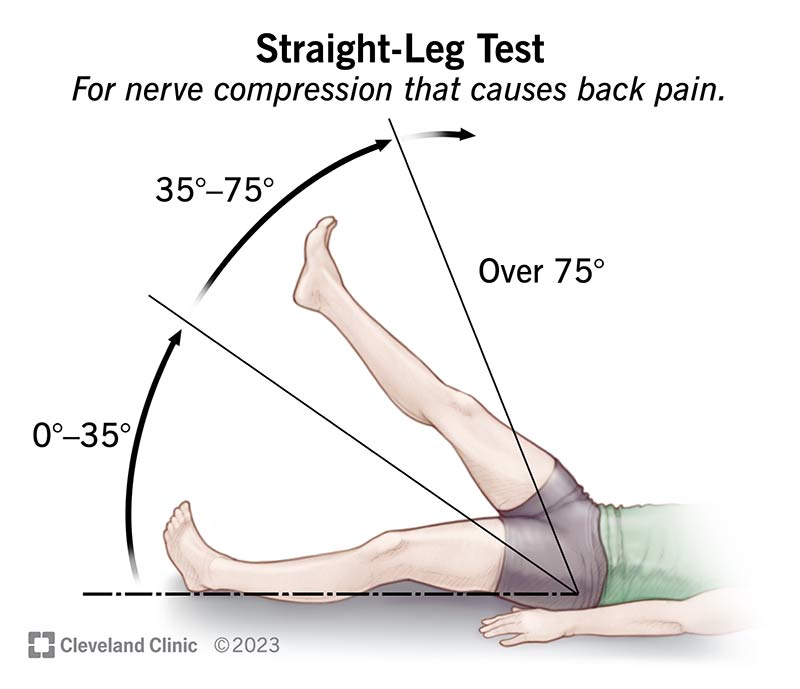
The straight-leg test is common for diagnosing back problems. The point where pain starts is what providers look for.
The straight-leg test helps healthcare providers diagnose sciatica and other causes of back pain.

How is sciatica diagnosed?

A healthcare provider can diagnose sciatica using a combination of methods. They’ll review your medical history and ask about your symptoms. They’ll also do a physical examination. That exam will include:

  • Walking. Sciatica often causes visible changes in how you walk. Your provider will watch for those changes as part of diagnosing sciatica.
  • Straight leg raise test. This involves having you lie on an exam table with your legs straight out. They’ll slowly raise your legs one at a time toward the ceiling and ask when you start to feel pain or other symptoms. These can help pinpoint the cause of sciatica and how to manage it.
  • Other flexibility and strength checks. These can help your provider determine if any other factors are causing or contributing to your sciatica.

What tests will be done to diagnose this condition?

Several tests can help with diagnosing sciatica and ruling out similar conditions. The most common or likely tests include, but aren’t limited to:

Management and Treatment

How is sciatica treated, and is there a cure?

Treating sciatica usually involves trying to decrease pain and increase mobility. Many treatments are things you can do yourself.

There are several treatment options if you have sciatica that won’t go away or is more severe. Surgery might be an option if your case is severe or other treatments don’t help.

Self-treatment

Depending on the cause, milder cases of sciatica usually get better with self-treatment.

NOTE: Pain that’s moderate to severe, with numbness and tingling or muscle weakness are all symptoms that need professional medical care. You shouldn’t try to self-treat them.

Self-treatments can include:

  • Ice. Cold or ice packs can help reduce pain and swelling during the first few days after sciatica pain starts. You can use an ice pack or a bag of frozen vegetables for this (but always wrap them in a towel to prevent cold-related injuries to your skin). Apply cold for 20 minutes at a time, several times a day.
  • Heat. After the first several days of using cold or ice, switch to a heating pad or warm compress. Apply heat for 20 minutes at a time. If you’re still in pain, switch between hot and cold packs — whichever best relieves your discomfort.
  • Over-the-counter medicines. Nonsteroidal anti-inflammatory drugs (NSAIDs) are usually the first choice. They reduce pain, swelling and inflammation.
  • Stretching and activity. Learning how to stretch properly from an instructor with experience with low back pain can be a major help. They may also be able to help you work your way up to other general strengthening, core muscle strengthening and aerobic exercises.

If the self-care treatment approach doesn’t help after a few weeks, you should talk to a healthcare provider.

Conservative treatments

Conservative treatments are a step up from self-treatment. Your healthcare provider can offer these as options if self-care wasn’t helpful or if your symptoms are severe enough to need more involved care.

Conservative treatments can involve similar treatments to self-care, but with your healthcare provider guiding you. They can also involve the following:

  • Prescription medications. Painkillers, muscle relaxers and other medications may help with sciatica symptoms. Other medications, like tricyclic antidepressants and anti-seizure medications, may also help if you have chronic or nerve-based pain.
  • Physical therapy. The goal of physical therapy is to find exercise movements that decrease sciatica by reducing pressure on the nerve. Options include stretching exercises or low-impact activities like walking, swimming or water aerobics.
  • Spinal injectionsInjections like corticosteroids may provide short-term relief (typically up to three months). These usually involve local anesthesia, so there’s less discomfort. Your healthcare provider can tell you more about this process.
  • Alternative therapies. These treatments are increasingly popular and offer options other than standard medical therapies or medications. They include seeing a chiropractor for spine adjustments, yoga, acupuncture and more. Massage therapy might also help muscle spasms that occur with sciatica. Biofeedback can also help you manage pain and relieve stress.

Surgery options for sciatica

Surgery may be the best option when sciatica is more severe. Usually, healthcare providers don’t recommend surgery unless you have symptoms that indicate nerve damage is happening or imminent. They may also recommend surgery if you have severe pain that prevents you from working or going about your usual routine, or if your symptoms don’t improve after six to eight weeks of conservative treatment.

Surgery options to relieve sciatica include:

  • Diskectomy. This is a surgery that removes fragments or small sections of a herniated disk that are pressing on a nerve.
  • LaminectomyEach vertebra has a rear section called the lamina (it’s on the side of the vertebra just underneath the skin of your back). A laminectomy involves removing a section of the lamina that’s pressing on spinal nerves.

What are the possible complications or side effects of treatment?

The possible complications and side effects depend on many factors, especially the specific treatments used, the severity of your symptoms, what caused your sciatica and more. Your healthcare provider is the best person to tell you about the possible side effects and complications that are most likely. They can also advise you on managing, minimizing or avoiding them.

How soon after treatment will I feel better?

Recovery time from sciatica depends on the specific treatment, the severity of your symptoms, their cause and more. Many cases of sciatica go away within four to six weeks without needing professional medical treatment.

More severe cases may also take weeks or months to get better, especially if you have more severe symptoms. Waiting too long to get treatment for sciatica — generally more than six months — also makes a good outcome less likely, so it’s important not to wait too long to talk to a healthcare provider.

Outlook / Prognosis

What can I expect if I have sciatica?

Milder cases of sciatica generally go away on their own with time and self-treatment. Most people (between 80% to 90%) with sciatica get better without surgery.

If your sciatica pain doesn’t improve after a few weeks of self-treatment, or you have concerns that you aren’t recovering as quickly as hoped, you should talk to a healthcare provider.

How long does sciatica last?

Sciatica often doesn’t last longer than six weeks. When it does, your healthcare provider may recommend more involved treatments, including surgery.

When can I go back to work?

When you can return to work or other regular activities depends on several factors. Those include your symptoms, the treatments you receive and more. Your healthcare provider is the best person to tell you if you can return to work, and what precautions or changes you might need if you do.

What’s the outlook for this condition?

Overall, the outlook for sciatica tends to be very good. Long-term issues aren’t common unless you have more severe symptoms.

Prevention

Is sciatica preventable?

Some causes of sciatica are preventable, but others happen unpredictably or for unknown reasons. For the causes that aren’t preventable, it may still be possible to reduce your risk of developing them.

The following can help prevent sciatica or reduce the risk of it happening:

  • Maintain good postureFollow good posture techniques while you’re sitting, standing, lifting objects and sleeping.
  • Quit (or don’t start) using tobacco products. Nicotine from any source (including vaping) reduces blood supply to your bones, which can weaken your spine and its various components.
  • Reach and maintain a weight that’s healthy for you. Your primary care provider can guide you on how to eat and get physical activity. Make sure you get enough calcium and vitamin D for bone health, too.
  • Stay active. Physical activity can include everything from stretching to strength training. Increasing core strength and flexibility can improve back pain. Other forms of activity, such as aerobic exercise, can also help you reach and maintain a weight that’s healthy for you.
  • Protect yourself from falls. Wear shoes that fit and keep stairs and walkways free of clutter to reduce your chance of a fall. Make sure rooms are well-lit, and there are grab bars in bathrooms and rails on stairways.
  • Take time to recover if needed. Don’t try to work through back pain. That can lead to even worse injuries. Back pain doesn’t have to keep you from being active, either. You can still participate in low-impact activities such as swimming, walking, yoga or tai chi.

Living With

When should I see my healthcare provider, or when should I seek care?

You should talk to your healthcare provider if you have moderate or worse pain, or if you experience any tingling, pins-and-needles sensations or numbness.

When should I go to the emergency room?

You should get emergency medical attention if you experience the following:

  • Any muscle weakness.
  • Loss of bowel or bladder control.
  • Severe pain that keeps you from your usual activities and lasts for more than a few hours.
  • Sudden severe pain, numbness or any other sciatica symptoms immediately after a fall, car crash or any other injury-causing event.

Additional Common Questions

Can sciatica occur down both legs?

Sciatica usually affects only one leg at a time. However, sciatica can occur in both legs in rare cases.

Does sciatica occur suddenly, or does it take time to develop?

Sciatica can come on suddenly or gradually. It depends on the cause. A disk herniation or injury can cause sudden pain. Arthritis in your spine or other degenerative conditions develop slowly over time.

Can weight gain during pregnancy cause sciatica?

Sciatica is common in pregnancy but isn’t usually related to pregnancy weight changes. Two main factors better explain why it’s more likely to happen during pregnancy.

The first explanation has to do with pregnancy-related hormones. Those hormones can cause a loosening of ligaments and connective tissue in your spine. That loosening makes your spine more flexible, which can cause disk slippage, pinched nerves and sciatica.

The weight and position of the fetus can also press on the nerve.

The good news is there are ways to ease sciatic pain during pregnancy, and the pain should go away after birth. Physical therapy and massage therapy, warm showers, heat, medications and other measures can help. Practicing good posture techniques during pregnancy can also help.

How can I tell if pain in my hip is a hip issue or sciatica?

Hip problems, such as arthritis in your hip, usually cause pain in your groin, or pain when you put weight on your leg or move it around.

If your pain starts in your back and moves or radiates toward your hip or down your leg, or you have numbness, tingling or weakness, sciatica is the most likely cause.

Sciatica vs. radiculopathy — what’s the difference?

Radiculopathy is a broader term that describes the symptoms caused by a pinched nerve in your spine. Sciatica is the most common type of radiculopathy.

Should I rest if I have sciatica?

Rest is helpful during the first two days you have sciatica. But total rest isn’t likely to help, and physical inactivity can make your pain worse and slow healing. The goal is to find a balance so you’re active enough to stay flexible and maintain strength but not make sciatica worse or injure yourself. A healthcare provider can guide you on how to find this balance and help you recover.

Can sciatica cause my leg and/or ankle to swell?

Sciatica from a herniated disk, spinal stenosis or bone spurs can cause inflammation or swelling in the affected leg. Piriformis syndrome complications can also cause leg swelling.

A note from Cleveland Clinic

Sciatica pain in your back, butt or legs can disrupt your life in many ways. Fortunately, there’s a lot you can do to help yourself recover. You can often treat milder cases yourself. More intense symptoms are also often treatable. Surgery usually isn’t necessary, but it’s an option if your symptoms are severe. With treatment, you can put sciatica behind you and return to living on your terms.

https://my.clevelandclinic.org/health/diseases/12792-sciatica