Sciatica Help 4 Friends

Thursday, 13 August 2020

Sciatica – A Common “Pain in the Nerve” for All Ages

From newswise.com
By Jonathan Yun, M.D.

Newswise — COVID-19 stay-at-home guidelines have created many lifestyle changes, including new home workout routines and do-it-yourself home improvement projects. Doctors warn, however, that increased activity for those not used to certain exertion levels can lead to strains and pains, including one of the most common nerve conditions, sciatica (sy-at’-ick-uh).

“While there are many reasons sciatica can occur, it’s a pain that is often associated with injuries from over-activity,” said Jonathan Yun, M.D., neurosurgeon with the Montclair Neuroscience Institute at Mountainside Medical Centre. “With people staying at home, not working and finding more time during the day to be active, especially during the summer, I have noticed an increase in patients experiencing sciatic nerve pain.”

What is sciatica?
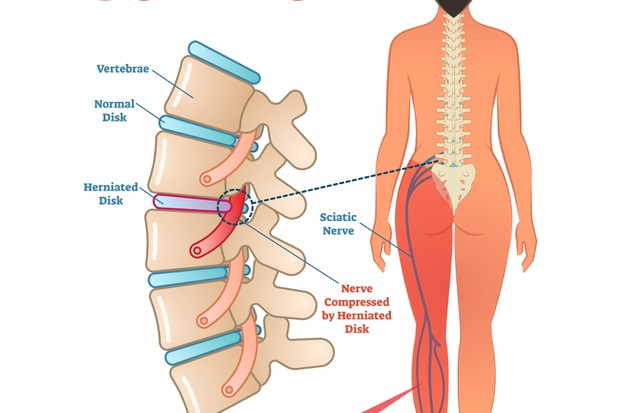
Sciatica, also known as radiculopathy, occurs when the sciatic nerve, which begins in the lower back and splits to run down each leg, is pressed or pinched. Associated pain is described as traveling down the leg to the foot and can vary from a dull sensation or soreness to severe stabbing, radiating pain. In some cases, the pain can be so intense that it becomes difficult to walk or stand.

“Sciatica can affect people at any age, including those who are older and are prone to arthritis,” said Yun. “While the most common cause may be a herniated or slipped disk causing pressure on the nerve root, sciatica symptoms can also be triggered by years of wear and tear, bending, twisting and stretching for long periods of time.”

The most common symptoms of sciatica include:
  • Lower back pain spreading from a person’s bottom and back of thigh
  • Pain that travels from the bottom toward the foot
  • Numbness or weakness (in severe cases)
“One misconception about sciatica is that this type of leg pain always comes with back pain,” said Yun. “This is not always the case. Usually pain is more severe in the leg than the back. You can also experience no back pain at all. If a patient comes in with pain that goes down a certain part of their leg, I can almost guarantee I know exactly what nerves are involved, simply based on the pattern of pain.”

Who is at risk for sciatica?
While certain health conditions, such as obesity, can trigger sciatica, several other factors may contribute to a person having a higher risk, including:
  • A current or previous injury to the lower back or spine
  • Weakened core muscles (of the back and abdomen)
  • A job that requires heavy lifting or prolonged periods of sitting
  • Improperly lifting objects, such as when weight lifting or picking up a heavy box
  • Osteoarthritis
The good news is with the right treatment, sciatica can often be relieved.

What are common treatments for sciatica?
If symptoms of sciatica have been persistent and ongoing, it’s important to be evaluated by a physician because sciatica involves irritation or injury to the nerve. If it goes untreated, it could lead to a higher degree of nerve injury.
Common treatments for sciatica include:
  • Nonsteroidal anti-inflammatory (NSAIDs) medications, such as ibuprofen
  • Heat or cold applied to the sore muscles
  • Movement, which helps reduce inflammation
  • Physical therapy
  • Minimally-invasive surgery
“Surgery is really at the end of the treatment spectrum. It’s always an option, but it’s never the first option. We always try to relieve pain from sciatica first through conservative measures, like medications and therapy,” said Yun. “We explore surgical options if those measures do not work. In many cases, surgery has provided immediate relief and allowed patients to return home the same day and get back to enjoying life virtually pain free.”

https://www.newswise.com/coronavirus/sciatica-a-common-pain-in-the-nerve-for-all-ages/?article_id=736275

Posted by itstimholman at 08:04 No comments:
Email ThisBlogThis!Share to XShare to FacebookShare to Pinterest
Labels: symptoms, treatment

Wednesday, 12 August 2020

Pregnancy sciatica: Natural ways to get relief

From thehealthsite.com

Pregnancy sciatica is a temporary condition. But since it is not feasible to take an over-the-counter pain reliever now, try out these natural remedies instead

When you get pregnant, your body undergoes many changes to accommodate a growing foetus. This can indeed by an overwhelming time for you. You may experience intense food cravings, morning nausea and lethargy on a daily basis. Sometimes, your blood pressure may fluctuate, you may get gestational diabetes and also have trouble breathing. Other than this, swollen ankles, trouble sleeping, and heartburn may cause you distress. Backache is also a common occurrence during this time. But some women also experience sciatica pain during their pregnancy.

This is basically a shooting pain that originates in your hips and radiates down your foot. It happens when your sciatic nerve is compressed. This nerve runs below the uterus and it may get compressed when the growing foetus pushes against it. At times, this pain can be so severe, that it may be a problem for you to walk around, sit or even lie down. Since during this time, pain medications are usually not allowed, you can try to get relief from this pain naturally.

Symptoms of pregnancy sciatica pain

If you have this condition, you will experience pain on one side of your buttocks or leg. It may be continuous or occasional.  This sharp or burning pain may radiate from the buttocks down the back of your thigh and on to the foot. You may also experience numbness or weakness in the affected leg and difficulty walking, standing, or sitting. Pregnancy sciatica is a temporary condition, and, at any other time, your doctor would have prescribed an over-the-counter pain reliever. But these non-steroidal anti-inflammatory drugs are usually the last resort during pregnancy as it can cause certain complications. Therefore, here are a few natural remedies for this condition.

Get regular prenatal massages

Prenatal massages are important not only to get rid of aches and pains but also for healthy fetal development. If you have pregnancy sciatica, this can help you avoid the compression of the sciatica nerve. Regular deep tissue massages, especially on the hip and lower back, will help. But get the massage done by a professional and under the guidance of your doctor to avoid complications.

Stay physically active

Regular exercise during this time can offer relief from sciatica pain. It will reduce inflammation, improve blood flow and realigning your joints and muscles. During pregnancy, your body secrets a hormone called relaxin. This loosens your ligaments to allows your pelvic girdle to spread more easily in preparation of a normal delivery. This may also cause sciatica pain. But exercise can help significantly. But be sure to consult your doctor before starting your fitness routine.

Take magnesium supplements

The mineral magnesium corrects nerve function. You can have this in the form of supplements or source it from foods. Alternatively, you can also use magnesium oil to massage your legs. This promotes nerve regeneration and decreases inflammatory response.

Adopt prenatal yoga

This can offer relieve from sciatic nerve pain. However, you need to first consult your doctor and the proceed. Once you get the go-ahead from your doctor, you can join a certified prenatal yoga class.

https://www.thehealthsite.com/pregnancy/pregnancy-sciatica-natural-ways-to-get-relief-762201/

Posted by itstimholman at 04:08 No comments:
Email ThisBlogThis!Share to XShare to FacebookShare to Pinterest
Labels: pregnancy

Thursday, 6 August 2020

Sciatica: what it is and how to treat it

From 220triathlon.com

Sciatica’s debilitating, making every little task painful, never mind training for a triathlon. Here, physio Christos Kostas explains causes, symptoms, treatment and prevention

Some triathletes might be at more risk of sciatica than others and, for those athletes, it can put them out of sport for weeks at a time and be hard to work around. But what exactly is sciatica, what are the warning signs, how do you treat it and, better still, how do you prevent it in the first place?

What is sciatica?

Sciatica is named after the origin of the pain it causes – the sciatic nerve. The sciatic nerve is the largest nerve in the body, starting in the lower spine, going deep in the buttock and down to the feet.


Sciatica generally flares up for four to six weeks, but in some individuals it might last longer. As the sport of triathlon has continued to grow, increasing numbers of triathletes have checked into neurosurgery clinics with complaints related to various spinal issues (1).

What causes sciatica?

Sciatica is generally caused by the nerve being trapped, whether it be by a herniated disc, bone spur on the spine or, most commonly, a tight muscle trapping the nerve. For triathletes, muscle compensation from past injuries (that haven’t fully recovered) is the most common cause of sciatica.

The condition is actually relatively common in athletes and the general population alike. One questionnaire directed at triathletes specifically found that lifetime incidence of lower-back pain was 67.8% with 23.7% of cases possibly starting with disc problems (1). Of the three sports incorporated in triathlon, cycling seems to have the major risk factor for lower-back pain in triathletes (2).
It’s important to note that most people over the age of 35 have a disc bulge and feel no symptoms. Indeed, even if you have sciatica and a disc bulge, it’s relatively rare that that is the cause of your sciatica. So don’t panic.

What are the symptoms of sciatica?

Common symptoms of sciatica include:
  • Back pain
  • Pain in the back of the leg
  • Hip pain
  • Burning or trickling sensation
  • Shooting pains in the lower body
More often than not, the pain will fire through one side of the body if the legs or feet are affected, not both.

Sciatica might be diagnosed immediately if it follows a significant accident or injury. If it’s more of a slow onset that worsens over time, it might take a little longer to get a treatment plan in place. Initial assessment will involve questions and being asked to ease into a few different stretches or exercises to determine which results in the most pain.

Further tests can involve examining nerve impulses and imaging of the spine to look for abnormalities such as a slipped disc.

How can you treat sciatica?

Most people will reach straight for an over the counter painkiller such as Ibuprofen when pain and inflammation strike. This can certainly be a tool used in the short term to allow for sleep and day-to-day life to continue without being impeded too much, but we also need to look into longer-term solutions.

Hot and cold treatment can also be useful for short-term relief. An ice pack wrapped in a towel can be applied to the area for 20 minutes a day to relieve swelling and inflammation, especially after a competition or training session has caused sudden pain. After two or three days, you may find heat application is more beneficial. The two can be alternated to determine which is most effective.
If you have a prolapsed disc that doesn’t need urgent surgery, your best cause of action is to build the muscles of the lower back – strong things rarely break!

If it’s muscular, a good physiotherapist would identify the muscles in spasm and release them in two or three sessions. Only then would they prescribe a specific stretching programme (stretching can make acute sciatica worse), followed by strengthening exercises to further support the back. A strength programme with barbells – not bands or bodyweight – is the secret to preventing repeat injuries.

Stretches to improve posture and relieve some of the tension of the nerve can be helpful in treating sciatica. These might include cobra poses, prone arm and leg lifts, and upper pigeon poses. Core strengthening can also be useful. A qualified physiotherapist will be able to advise on the best stretches and exercises for you depending on the severity of your sciatica.

If lumbar disc herniation is the culprit, acupuncture has great success rates of 96.7% in a trial of 30 patients. Acupuncture is a treatment of traditional Chinese origin where fine needles are inserted into the body – in this scenario, into the sciatic nerve trunk – for therapeutic benefit. Treatment can be available through a GP or physiotherapist on NHS referral, or through private appointment.

In rare cases, sciatica cannot be repaired with these options. Surgery is the last resort for about 5-10% of people with sciatica. The two most common types of surgery are discectomy, which involves removing the part of the disc putting pressure on the nerve, or microdiscectomy, which uses a microscope to remove the disc through a small incision.

How can you prevent sciatica?

The two main risk factors for long-term spinal problems include sports-related injuries and overuse. For this reason, it can be beneficial to work on factors such as form and technique while running or on the bike to prevent unnecessary pressure on the spine and nerve. This is where a good strength programme focusing on your hips, glutes and lumbar erectors – the muscles that support your spine – will help. When we repeat the same action thousands of times our body fatigues, causing our technique and posture to fail. The stronger we are, the longer we can keep in an optimal position. This protects the back and spine and leads to faster times.

It’s also key to have a programme that allows adequate rest between training sessions. This might mean periodising training so that volume and frequency change over the season.
The chance of developing sciatica can also be increased by being overweight. Assuming most reading this are healthy and active, this is more something to be mindful of for later life if you’re already experiencing some symptoms. Age and inflammation are also risk factors for sciatica. As you age, be sure to maintain mobility in your hips and ankles. Two good tests are your ability to sit comfortably cross-legged on the floor for five minutes and to perform bodyweight squat below parallel without your heels lifting off the floor.

As you age, be sure to maintain mobility and flexibility in your back. Also, be sure to combat inflammation with antioxidants from eight or more portions of fruits and vegetables. I’d also recommend the use of dietary supplements such as a daily dose of omega-3.

Like with any health issue, if you have any concerns at all, seek medical advice from a qualified medical practitioner, whether that’s a doctor or physiotherapist. 
Christos Kostas is a physiotherapist with salecca.co.uk

https://www.220triathlon.com/training/injuries/sciatica-what-it-is-and-how-to-treat-it/


Posted by itstimholman at 03:18 No comments:
Email ThisBlogThis!Share to XShare to FacebookShare to Pinterest
Labels: causes, symptoms, treatment

Friday, 24 July 2020

Can You Avoid Back Surgery With Yoga?

From news.yahoo.com

Jack Noonan was 74 years old when his sciatic back pain was so bad that he couldn't walk. "I would be walking with my wife and dog, and I'd have to stop and say, 'I can't go on,'" says Noonan, now 79. "It was just the worst pain I ever had. I couldn't believe it."

Noonan's debilitating pain was costing him more than physical discomfort, it started to affect his livelihood. Knowing he would experience pain when walking, he became less active and gained weight. His pain also affected his mood as he became more irritable.

Noonan's lower-back was being compressed from age and gravity -- and a perineural cyst, a fluid-filled sac that forms near the lower, sacral area of his spine. His doctor told him the only solution for his back problem was surgery, but he was reluctant.

Avoiding Back Surgery

"I didn't want to do that," Noonan says. "I read about the surgery, and I know there can be some pretty awful consequences. I had long been a fan of physical therapy -- and yoga as well. So I knew I had resources to fall back on."

Like Noonan, many people successfully alleviate back pain with yoga, and scientific evidence suggests it works. A study on "Yoga for Military Veterans With Chronic Low Back Pain" published in the American Journal of Preventive Medicine in 2017 shows yoga improved low back pain among veterans, who also reduced their use of opioids.

It included 150 military veterans with chronic low back pain from a major Veterans Affairs Medical Centre in California. They participated in yoga classes twice weekly for 12 weeks, along with a home practice. They practiced Hatha yoga, which consisted of modifiable and accessible physical postures, movement, brief meditations and breathing techniques.

The study was conducted by Erik Groessl, professor of family medicine and public health at the University of California San Diego and director of the UCSD Health Services Research Centre.

"In general, the conclusion is that there is solid, high-quality evidence, and we conclude yoga is an effective treatment for low back pain," Groessl says. "Like any treatment, there's an individuality aspect to it, it could make some people worse, if they have a unique type of medical problem or health condition. But it will make more people better."

Groessl confirmed Noonan's scepticism that back surgery can be a gamble.

Healing Pain With Yoga

From the time Noonan was told he would need surgery, he made it his mission to fix his back with yoga, movement and exercise. It took six months of practicing yoga daily for Noonan to begin to ease his low-back pain. He stayed disciplined, made some refinements to his routine and has stuck with his yoga practice for five years now. He's lost 15 pounds, feels more youthful and avoided the back surgery he was dreading.

"It's not a quick fix," Noonan says. "And it's something I will never be able to stop because I don't want that sciatic pain ever again."

And he doesn't stop. Noonan, who lives in Philadelphia, practices the same 15 movements religiously. He does each pose for 15 breaths, which adds up to a 30 minute practice he completes twice a day, every day. Once in the morning and again in the evening.

Noonan's yoga routine consists of nine floor exercise. He starts by lying down on his back, with his feet extended straight out and stretches his neck by pressing the back of his head against a neck pillow, commonly used for neck-support while flying. He stays supine for pelvic tilts, where he arches and releases his back in cadence with his breath.

"It feels really wonderful," Noonan says. "These first two things, really get me centred. It is very important to do these things for 15 breaths."

He continues on his back with bicycle movements, hamstring and IT band stretches and a supine twist. Next, he practices boat pose, where he sits on the floor with his legs and back suspended off the floor in a V-shape with his knees bent for 15 breaths.

"I could hold a really good boat pose for 15 breaths and enjoy it," Noonan says. "It feels great to do that, on the verge of turning 80. It's so cool. It's given me terrific core strength."

He moves into a standing series that involves band work for his shoulders, chest and upper back and tree pose for stability.

"I think everybody in their 70s ought to do these stretches if they want to be flexible," Noonan says.

Yoga Instead of Opioids

In 2017, an impactful paper was published in Annals of Internal Medicine , which provides guidelines for physicians to prescribe yoga as a non-pharmacological therapy to treat low-back pain.

"Experts recommend physicians use these non-pharmacological modalities including tai-chi, acupuncture and yoga for back pain as a front-line treatment," Groessl says. "No more opioids. Use this stuff first. That's just the ultimate demonstration of how far it's gotten for back pain. And where we want to go with other conditions."

Newer research shows other secondary benefits of yoga for low-back pain, such as a decrease in fatigue, which is a common symptom of those battling chronic pain.

One National Institutes of Health pilot study that is in the process of getting published compares two types of yoga: restorative and more active hatha yoga for active-duty military with low-back and or neck pain.

"One preliminary finding, restorative yoga seemed to be attended slightly better and have slightly better effects," Groessl says. "It involved less moving, less stretching and more relaxation. At least in that population, where a lot of people are still working and are younger than our veterans, pushing to do more may not be the right approach for some."

Noonan also found a more easeful approach to his yoga practice to be most beneficial. "Less is more," Noonan says. "It's really important to go slowly and stretch, or the muscle won't stretch."

Other Benefits of Yoga

Noonan is now pain free and back doing the activities that he loves and makes him feel more like himself again. Beyond pain relief, he also notices many mental benefits.
"Being disciplined has made me much more focused and creative," Noonan says. "I can think more clearly and more imaginatively."

Now that Noonan has his back pain under control, he is setting his sights on finishing his memoir, writing another book, biking 15 miles a day and helping those in their 70s transition into their 80s without back pain and be more flexible and fit.

"Yoga has made me stronger, more optimistic, more disciplined, more open to miracles around us," Noonan says. For those looking to try yoga for back pain, he suggests, "start small. Give it time."

https://news.yahoo.com/avoid-back-surgery-yoga-110000456.html
Posted by itstimholman at 04:23 No comments:
Email ThisBlogThis!Share to XShare to FacebookShare to Pinterest
Labels: back pain, surgery, Yoga

Wednesday, 15 July 2020

How CBD is Helpful for Sciatica

From eurweb.com

A lot of people are becoming aware of CBD (Cannabidiol), its different products, and several potential benefits of it. From treating normal pains to dealing with chronic conditions, CBD has attracted a large amount of interest in the natural medical community over the last couple of years.

CBD has a lot of healing properties, hence it becomes an excellent option when selecting daily supplements. Using the best CBD cream for sciatica is a particularly new idea but one that has a good deal of potential and has the ability to change the way that patients manage the effect of the condition. 

So, what exactly is sciatica, and how is CBD helpful for managing the symptoms of Sciatica?

What Is Sciatica?

Sciatica is a situation wherein your sciatic nerve will become damaged or irritated, resulting in sciatic nerve ache. The sciatic nerve starts from your hips and down to your feet, it generally affects the lower back to feet area of your body. 

You may feel the sciatica pain in all the regions where the sciatic nerve is traveling through or be limited to some of the specific regions of your body, which may include your lower legs or feet. Other signs and symptoms of sciatica encompass tingling within the affected areas or a numb sensation. Your legs and toes also can experience weakness, making ordinary movements becomes tough.

Simple movements that include sneezing and coughing can be a reason for the increasing pain of sciatica, as the sciatic nerve is shaken because of these sudden movements.

It has been seen in most of the cases that sciatica is not a permanent condition that lasts from between 4 to 6 weeks. There are certain cases, however, wherein sciatica lasts much longer. There are a lot of CBD products discovered which can help in reducing the pain like CBD oil, best cream for sciatica pain, etc


What Causes Sciatica?

Any type of pressing or producing fiction on the sciatic nerve causes the problem of sciatica, inflicting it to become irritated. There are a lot of reasons which can cause pressure or friction on the sciatic nerve that has been linked to sciatica reasons.

In most of the cases, one common reason has been seen for sciatica and it is a slipped disc because of an accident and injury. A slipped disc happens while the soft tissue among the backbone and different bones is driven out of place, which causes the spine to make a pressure on nerves. When one of the nerves in the above process is the sciatic nerve, it may cause sciatica.

Spinal stenosis is also another cause of sciatica, which means narrowing of the spinal canal. Spinal stenosis can be seen in the nerves when the spinal cord becomes compressed. Generally, spinal stenosis is seen in old age people and people often misunderstood it as normal back and leg pain.

Sciatica also can be precipitated because of spondylolisthesis, a situation when the bones in your spine slip out of place. The motion of bones can bring friction and pressure among the sciatic nerve and the bones. Spondylolisthesis is most common in the lower portions of the back and is one of the main causes of lower back pain. Many people consider this as general aches and pains in their lower back and hence do not realize that they are suffering from spondylolisthesis. 

As Sciatica is so common and can happen with anyone therefore it became crucial to find some accurate and quick treatment for this. As a result, medical professionals developed the best CBD cream for Sciatica which is helpful in reducing the pain and symptoms of sciatica. 

How Can CBD Help With Sciatic Nerve Pain?

Using CBD for sciatica is a new idea, however one which has confirmed to be extremely beneficial for many humans struggling with the symptoms of Sciatica. It is not a new idea to take cannabis for nerve pain and other pain-related conditions. A lot of studies and researches are performed that have considered the effect and consequences that CBD can have on pain and whether it is able to be used as a herbal pain reliever.

When CBD enters the body, it works along the body’s natural cannabinoids to ensure that the endocannabinoid system of your body is working properly and effectively. The endocannabinoid system is the health system liable for managing several systems of a human body, which includes ache and inflammation.

An increase in cannabinoids can assist the endocannabinoid for targeting inflammation and it can reduce the pain which occurs because of damage and injuries. CBD is a natural anti-inflammatory, helping to reduce inflammation and pain in the same way as over the counter medicinal drugs can.

It is crucial to reduce inflammation while treating sciatica as it could ease the stress being placed at the sciatic nerve. Another big advantage of CBD is that it is able to alleviate pain, permitting you to live your life actively and also provides a speedy recovery. 

There are a number of ways to take CBD, and you just need to find a suitable technique that works for you and that you can perform in your daily routine easily. If you really want to get recovered fast with CBD so you need to take regular dosage of it as prescribed by your doctor. 

Ways To Take CBD for Sciatica Pain

Some human beings discover that CBD oil and CBD cream are the easiest way to take CBD into their day, while there are many people who think it is easy to take CBD capsules daily. No matter which method you are using, what’s important is you become comfortable with that method and it works for you. Also, it is crucial that the dosage suits your needs.

One of the most effective ways to control sciatica is by using CBD topicals while including the serums, oil, patches, and the best CBD cream for Sciatica. It is the tendency of Sciatica pain to be isolated to specific areas of the body, and CBD topicals assist you to focus on these areas without affecting any other part of your body. 

CBD tinctures and CBD oils offer control and customization for sciatica. If you are using this method then you need to measure an exact amount of oil with each use. The way in which you take CBD oil also can be customized.

CBD pills are best for those who are looking for a quick and discreet way to take CBD or who do not want to take daily measures for their personal dosage. 

https://eurweb.com/2020/07/14/how-cbd-is-helpful-for-sciatica/

Posted by itstimholman at 06:39 No comments:
Email ThisBlogThis!Share to XShare to FacebookShare to Pinterest
Labels: balm, CBD, Sciatica nerve

Wednesday, 8 July 2020

Are massages actually good for you? An expert gives their view

From womanandhome.com

Many of us think of having a massage as the ultimate self-care treat; with 76% of Brits reporting that they book an appointment for their mental wellbeing – but are massages good for you?

You may be wondering when massage therapists will be resuming their services. But in the mean time, it’s worth considering how a massage can benefit your body and mind.


Whether it’s for a condition such as arthritis or just to de-stress after a long week, there’s a reason a trip to the spa is so popular, but are massages actually good for us? Our expert, qualified osteopath, Anisha Joshi (osteoanisha.com) has the lowdown.

Is massage good for arthritis?

Massage can be very beneficial to arthritis sufferers, and is often recommended to those with the more common osteoarthritis (a degenerative condition caused by ‘wear and tear’) and rheumatoid arthritis (an auto-immune disease causing inflammation in the joints).

“Massage will warm the body through boosting circulation, in turn, easing arthritis pain which responds well to heat,” says Anisha. “A soft tissue massage is best to improve mobilisation of the joints and reduce stiffness caused by arthritis.”

 Does massage help back pain?

“Massage can be a great source of natural short-term pain relief for anyone not wanting to rely on pain killers, and that does not need a stronger, more invasive treatment such as ESI (epidural steroid injections),” says Anisha.

"Lower back pain in particular – caused by muscle tightness – can be improved by massage though reducing tension in that area.”
A common physiological response to massage is the release of the hormone Oxytocin, which reduces our perception of pain.

Does massage help sciatica?

“I see a lot of patients for Sciatica – a debilitating chronic pain condition named after the sciatic nerve, which runs through your piriformis muscle in your buttock,” says Anisha.
“If this muscle is tight due to overuse or injury then it can lead to an impingement of the nerve. An osteopath uses a combination of techniques and massage can help relax of the muscles and reduce the nerve impingement.”

                                                                              Getty

Does massage help weight loss?

“Due to the fact massage encourages lymphatic drainage and boosts metabolism, it is an option worth considering for those trying to lose weight,” says Anisha. It’s crucial however that you are eating healthily and exercising regularly in addition. If you are trying to lose weight, being in the right frame of mind is paramount. I consider massage to be as beneficial to the mind as it is to the body – and by releasing hormones like dopamine (the ‘happy’ hormone) you are boosting your mood and overall wellbeing, better setting you up to be successful in your weight loss journey.

What massage is best for knots / what are knots in muscles?

Knots can be found mostly anywhere muscular on the body – and can be caused by stress, dehydration and even poor eating habits. “They are small, firm bumps that are painful to press on,” says Anisha.

“Whilst some knots can go away on their own, often massage techniques like ‘deep tissue’ need to be used to loosen the muscle tension and reduce the pain.”

“We hold so much tension in our shoulders, which his often stress and anxiety manifesting itself as such. Posture can also be a factor,” says Anisha. “The type of massage and general approach will be based on the cause of your shoulder pain. An osteopath can help you figure this out.”

Massage, along with stretching techniques, will be used to help improve movement and reduce muscle tension.

https://www.womanandhome.com/health-and-wellbeing/wellbeing/are-massages-good-for-you-365972/
Posted by itstimholman at 03:50 No comments:
Email ThisBlogThis!Share to XShare to FacebookShare to Pinterest
Labels: massage

Saturday, 4 July 2020

Sean McCawley Fit for Life: Managing sciatica pain

From napavalleyregister.com/lifestyles

Physical pain throughout the body is a nuisance to our lives in many appearances. A decrease in productivity can occur because we are apprehensive about how a specific physical activity will result in pain for days to weeks. Psychological and emotional health can be affected by focusing on pain and diverting our attention away from enjoying our lives. We can even lose sleep due to the presence of pain.

In a world where managing stress is key to living a long life, the last thing we need is a loss of sleep from physical pain.

A common area of pain we see with our personal training clients in Napa is sciatica. Symptoms of sciatica include pain originating from the middle of the buttocks. This pain can travel down the entire back of the leg to the heel. This Sciatica can present itself as a nagging pain for a short period or can increase to be an everyday, debilitating, chronic pain.

Pain in the posterior hip and buttocks region is associated with the impingement of the sciatic nerve. This pronounced, thick nerve is formed from the root nerves streaming form the lumbar and sacral portion of the spine. The nerve budding out from these sites braid together to form the sciatic nerve. The large sciatic nerve traces its way down the leg from the buttocks region to the heel of the foot.

                                                                    Sean McCawley 

Compression of the nerve can cause neuropathy down the entire back of the leg. This disrupting compression can be a pinch from a disc in its origination points caused by an abnormal shift of the vertebra or a muscular strain around the spine. However, one the most popular culprits response for this “pain in the butt” is a tight muscles pressing the nerve. Introduce yourself to the piriformis.

This pear-shaped muscle is conveniently located precisely over the top of the sciatic nerve. It originates on the posterior portion of the outer hip. This important muscle is responsible for internal and external rotation of the hip. However, when the piriformis tightens and gets stressed from overuse or gets atrophied from underuse, the muscles will press on the sciatic nerve.

The physical compression of the piriformis pressing on the sciatic nerve causes a disruption in the electrical signals the nerve normally sends from the brain the to the lower extremities. Individuals with these symptoms experience nerve pain. Similar to when the funny bone of the elbow gets hit and we grimace in excruciating discomfort, the compression of the sciatic nerve isn’t much different.

To prevent sciatic pain , strength and conditioning of the hip joint is critically important. Exercises such as squats, hip abductions and hip mobility exercises prominently seen in yoga help to maintain the structural integrity, blood flow, and laxity to the piriformis and surrounding musculature. Adequate strength in the muscles surrounding the piriformis even out force put on the hip joint, lessening the likelihood of the piriformis overworking.

Muscles that take on too much of a load get stressed, tighten, and possibly seize up. Therefore, focusing on the well-being of muscles surrounding the hip joint will decrease the likelihood of sciatica occurring.

An exercise we prescribe personal training clients perform when sciatica is a symptom is the “prone 90.” To perform, lie face down on a comfortable surface. You can put a pillow under your face if needed. As you are lying face down, bring the thigh of the leg affected by sciatica to the outside of your body. The knee should be bent, and your thigh should be as perpendicular as possible to your hip joint. Your knee and thigh should be as close to 90-degree bends as you can.

Once this position is achieved, relax as much as you can for 90 seconds. Literally, get your smartphone out and time yourself for 90 seconds. The theory behind this exercise is to loosen the tight piriformis muscle. By relaxing the stressed-out muscle, there should be less tension pressing on the sciatic nerve. Performing this exercise every night before bed can help to alleviate sciatica symptoms.

It’s important to listen to the pain signals the body gives us. Once you get a pain signal, solve it.

After a solution has been met to reduce the pain, take preventive measures through strength and conditioning of the body to ensure the history of pain doesn’t repeat itself. The hips are one of the most important joints in body. Imagine living without hips. It wouldn’t be fun. Treat the integrity and well-being of your hips the same way you would treat the stability of your job. Manage sciatica by being more in tuned with the well-being of your hips.

https://napavalleyregister.com/lifestyles/columnists/sean-mccawley/sean-mccawley-fit-for-life-managing-sciatica-pain/article_6d795830-90e1-59e0-a319-709ac7301bd4.html
Posted by itstimholman at 04:39 No comments:
Email ThisBlogThis!Share to XShare to FacebookShare to Pinterest
Labels: exercise, home exercises, muscle strains
Newer Posts Older Posts Home
Subscribe to: Posts (Atom)

Translate

What we talk about

acupuncture antidepressants arterial disease arthritis inflammation asanas back pain back stretcher balm bicycles blood clots buttocks Canada causes CBD chair chiropractic chiropractor chronic sciatica cycling daily routine diabetic neuropathy diagnosis diet doctor driving exercise expectations famous flexibility foam back rollers foot freeze gel gel hamstrings heels herniated disk hip pain home exercises India injection joints knees leg pains lifestyle lumbago manual therapies massage mattress medical advice medical cannabis menopause mind-body minerals mobility motivation MRI muscle relaxer muscle strains neck nerve flossing night office older osteoarthritis osteopathy pain relief physiotherapy Pilates piriformis muscle posture Poundland pregnancy prevention relief remedies research risks sacroiliac pain Sciatic nerve Sciatica nerve scoliosis seniors shoes sleep slipped disc Spain spinal canal spinal decompression spinal stenosis spinal twist spine spondyloarthritis spondylolisthesis sport story strength stretches surgery symptoms TENS unit therapy thigh travel treatment types UK varicose veins vegan veganism vitamins weight winter women workout Yoga younger

Blog Archive

  • ▼  2026 (26)
    • ▼  June (5)
      • 9 effective exercises for sciatica relief
      • Why Sciatica Is Becoming a Global Health Wake-Up Call
      • A spine surgeon reveals how to distinguish sciatic...
      • Sciatica acting up? These self-care treatments cal...
      • Is it just 'normal' back pain or sciatica? Warning...
    • ►  May (4)
    • ►  April (5)
    • ►  March (4)
    • ►  February (5)
    • ►  January (3)
  • ►  2025 (45)
    • ►  December (3)
    • ►  November (4)
    • ►  October (3)
    • ►  September (2)
    • ►  August (4)
    • ►  July (4)
    • ►  June (5)
    • ►  May (4)
    • ►  April (1)
    • ►  March (5)
    • ►  February (4)
    • ►  January (6)
  • ►  2024 (56)
    • ►  December (6)
    • ►  November (4)
    • ►  October (4)
    • ►  September (3)
    • ►  August (4)
    • ►  July (5)
    • ►  June (3)
    • ►  May (3)
    • ►  April (5)
    • ►  March (6)
    • ►  February (7)
    • ►  January (6)
  • ►  2023 (71)
    • ►  December (4)
    • ►  November (5)
    • ►  October (3)
    • ►  September (6)
    • ►  August (6)
    • ►  July (5)
    • ►  June (4)
    • ►  May (9)
    • ►  April (6)
    • ►  March (4)
    • ►  February (8)
    • ►  January (11)
  • ►  2022 (59)
    • ►  December (7)
    • ►  November (8)
    • ►  October (7)
    • ►  September (3)
    • ►  August (4)
    • ►  July (6)
    • ►  June (5)
    • ►  May (5)
    • ►  April (2)
    • ►  March (4)
    • ►  February (3)
    • ►  January (5)
  • ►  2021 (80)
    • ►  December (6)
    • ►  November (5)
    • ►  October (7)
    • ►  September (6)
    • ►  August (6)
    • ►  July (8)
    • ►  June (5)
    • ►  May (6)
    • ►  April (9)
    • ►  March (9)
    • ►  February (6)
    • ►  January (7)
  • ►  2020 (66)
    • ►  December (6)
    • ►  November (9)
    • ►  October (11)
    • ►  September (5)
    • ►  August (5)
    • ►  July (4)
    • ►  June (5)
    • ►  May (3)
    • ►  April (6)
    • ►  March (7)
    • ►  February (3)
    • ►  January (2)
  • ►  2019 (37)
    • ►  December (4)
    • ►  November (2)
    • ►  October (6)
    • ►  September (1)
    • ►  August (1)
    • ►  July (4)
    • ►  June (6)
    • ►  May (4)
    • ►  April (3)
    • ►  March (3)
    • ►  February (1)
    • ►  January (2)
  • ►  2018 (15)
    • ►  November (1)
    • ►  October (3)
    • ►  September (2)
    • ►  August (1)
    • ►  July (2)
    • ►  June (1)
    • ►  April (3)
    • ►  January (2)
  • ►  2017 (22)
    • ►  November (2)
    • ►  October (1)
    • ►  September (2)
    • ►  August (3)
    • ►  July (4)
    • ►  June (2)
    • ►  April (1)
    • ►  March (3)
    • ►  February (2)
    • ►  January (2)
  • ►  2016 (48)
    • ►  December (3)
    • ►  November (4)
    • ►  October (6)
    • ►  September (2)
    • ►  August (3)
    • ►  July (4)
    • ►  June (3)
    • ►  May (1)
    • ►  April (7)
    • ►  March (7)
    • ►  February (4)
    • ►  January (4)
  • ►  2015 (37)
    • ►  December (4)
    • ►  November (3)
    • ►  October (4)
    • ►  September (2)
    • ►  August (2)
    • ►  July (2)
    • ►  June (3)
    • ►  May (4)
    • ►  April (3)
    • ►  March (3)
    • ►  February (2)
    • ►  January (5)
  • ►  2014 (14)
    • ►  December (4)
    • ►  November (3)
    • ►  October (4)
    • ►  August (3)

Total Pageviews

If you enjoy this blog, please consider making a small $1 donation to help me keep it going. Paypal button is below. Thank you.

Search This Blog

Popular Posts

  • What should you do when sciatica flares?
    From health.harvard.edu By Heidi Godman These options can help calm the searing pain of an irritated sciatic nerve People with diagnosed sci...
  • Say Goodbye to Sciatica Pain with These 9 Effective Exercises
    From kreedon.com The intensity and debilitation caused by sciatica pain can make individuals hesitant to leave the comfort of their couch. T...
  • Reassessing Non-Invasive Treatments for Sciatica and Lumbar Pain
    From medicalresearch.com Sciatica and lumbar pain continue to be among the most frequent causes of disability across the adult population. I...
  • People With Pain From Sciatica Should Start Physical Therapy Early, Study Says
    From mindbodygreen.com Common back pains from  sitting all day , sleeping in a strange position, or minor exercise soreness generally resolv...
  • Immediate Relief for Sciatica: What You Can Do Now
    From oneorth.co.uk Sciatica is a common condition that affects millions of people worldwide, characterised by sharp pain, tingling, or numbn...
  • Poundland's £1 Freeze Gel hailed a 'miracle' by arthritis and sciatica sufferers
    From manchestereveningnews.co.uk "If you have sciatica like me, arthritis or just plain muscle aches, this stuff is brilliant." ...
  • Why you might already have back pain in your 30s—and what to do about it
    From glamour.co.za  Your first episode of back pain can come at you fast. One minute you’re sitting crisscross on the ground and yapping for...
  • Escape the Pain: Effective Remedies for Sciatica Symptoms
    From msn.com/en-gb Suddenly, it shoots into the leg, sitting becomes torture, and every step is a struggle. That’s what sciatica feels like....
  • Myths You Should Stop Believing About Sciatica
    From msn.com If you've ever had something affect your leg, there's a strong likelihood that it could be  sciatica . Occurring due to...
  • How to manage your sciatic pain
    From cuh.nhs.uk The good news is that 90% of people with sciatica will be better within three months. The most important thing you can do to...

Subscribe To This Blog

Posts
Atom
Posts
All Comments
Atom
All Comments

Other Blogs

  • Diabetes Help 4 Friends
    Soda vs. Juice: Which Is Worse for Blood Sugar? - From eatingwell.com *You may think juice is healthier than soda, but both can have a surprisingly similar effect on blood sugar * *KEY POINTS* - *So...
  • Vegan Latest
    Vegan and gluten-free cupcakes that taste just as good - From msn.com Cupcakes without butter, eggs, or wheat? It sounds impossible until you taste one. Modern plant-based and gluten-free baking has come a long...
  • Insomnia Help 4 Friends
    "I had no idea reading in bed could be causing my 3 a.m. wake-ups" - From tomsguide.com By Ruth Jones *I thought reading in bed was a great way to destress until an insomnia expert explained I was breaking one big sleep r...
  • Psoriasis Help 4 Friends
    How to Tell the Difference Between Inverse Psoriasis and Jock Itch - From healthcentral.com *These two skin conditions can cause considerable discomfort, but their triggers and treatments are not the same * *Key Takeaways*...
  • Arthritis Help 4 Friends
    Western research could expand remote access to care for thumb arthritis - From news.westernu.ca *Professor Joy MacDermid leading project funded by Ignite Innovation Grant to provide more equitable care * The burning, grinding ...
Picture Window theme. Powered by Blogger.